The term "bioplastics" is actually used for two separate things:
Bio-based plastics :
- This means that the material is (partly) derived from biomass or plants is a renewable resource.
- Biomass is usually plant material such as corn, sugarcane, or cellulose. Therefore this is not fossil fuel based. Hence it is also called as Green material.
Biodegradable plastics :
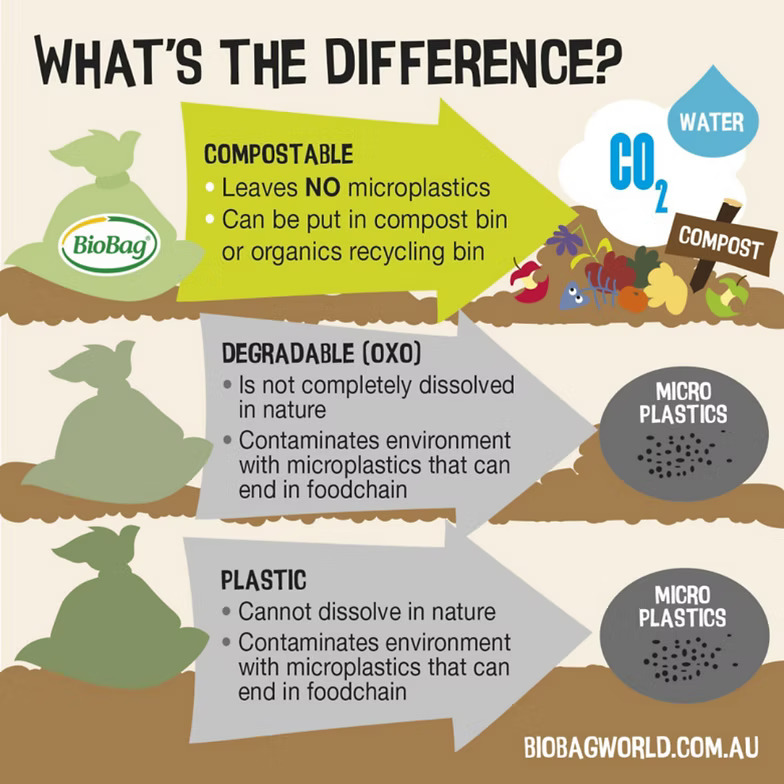
- Plastics that can be completely broken down by microbes in a reasonable timeframe, given specific conditions.
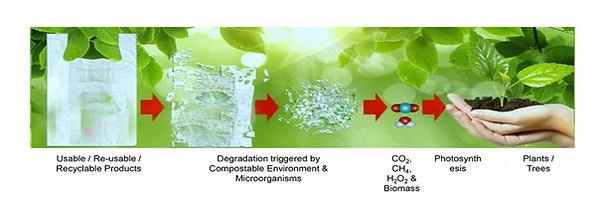
- Microorganisms in the environment are able to convert biodegradable materials to natural substances such as water, CO2, and compost without additives within a certain time and at a particular location.
What does compostability mean ?
Fragmentation – First step in the biodegradation process, in which organic matter is broken down into microscopic fragments.
Biodegradability – Complete microbial assimilation of the fragmented product as a food source by the microorganisms in the disposal environment.
Compostability – Complete carbon assimilation within 180 days in an industrial compost environment.
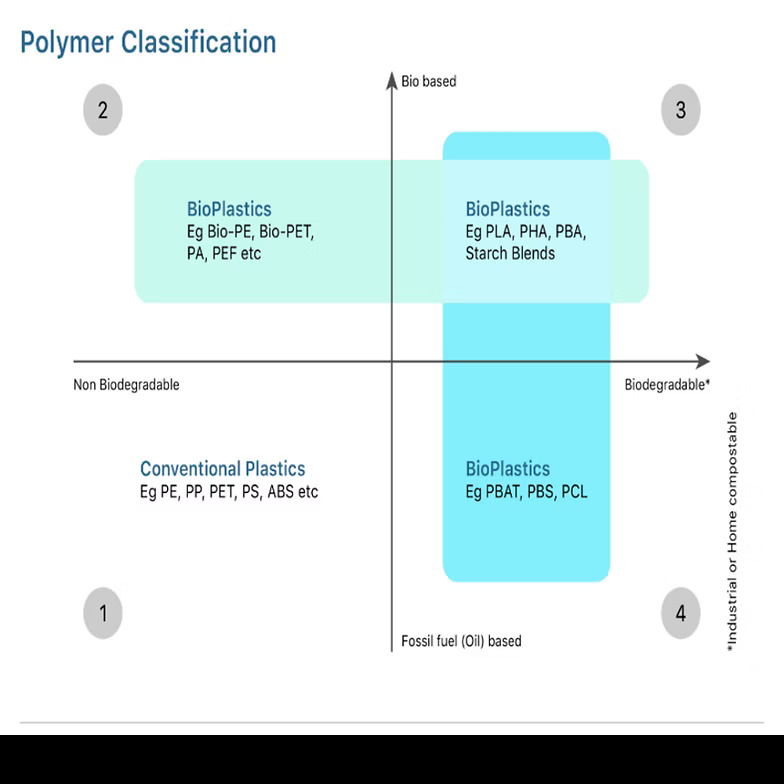
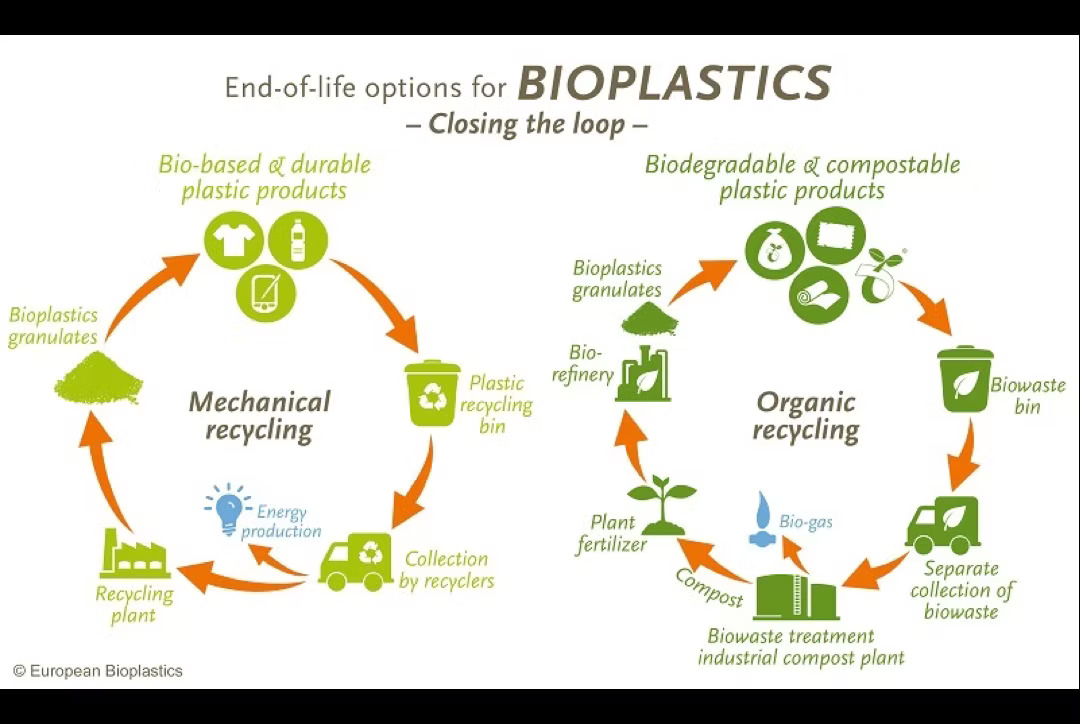
Bio-based And Bio Degradable : These are usually materials made from cellulose acetate (plant based) or lactic acid based blends (pure starch blends) and are used for primarily single use plastics like cutlery or some applications across panel/agriculture.
Some examples are :
PLA : Poly Lactic Acid
PHA : Poly Hydroxyalkanoates
And other plant based cellulose compounds
They are completely biodegradable as per the standards specified under ASTM D6400 / EN13432.
Oil-based and Biodegradable : Traditional oil based polymers which are biodegradable have existed for many years and usually being used for applications such as stents, tissue engineering and other biomedical applications.
Some examples are : PBAT, PBS and PCL
CIPET: BIODEGRADABILITY TEST REQUIREMENTS
- Biodegradation/Mineralization :
Ultimate aerobic Biodegradation (the breakdown of organic contaminants such as carbon by microorganisms when oxygen is present) must be more than 90% within 180 days. - Disintegration :
After 12 weeks not more than 10% of the product's original dry mass should remain when passing through 2mm sieve. - Ability of compost to support plant growth :
The Percentage of Seed germination should be greater than 90% for 2 different plant species.